(From Jon’s perspective)
In 1997 I went down the Intracoastal Waterway with my father, Russell, and brother, Andrew in another project boat. That journey at the dawn of the Internet era started out as daily email updates to friends, and ultimately became a book. Adventures in the Ditch earned modest success with an Eric Hoffer award as a ‘notable memoir’ and has sold over 1,100 copies in the years it has been available on Amazon.com. One of the readers of this blog, my well-known author friend Susan Moger, posed the question, “What’s changed since Adventures?” The simple answer is almost everything.


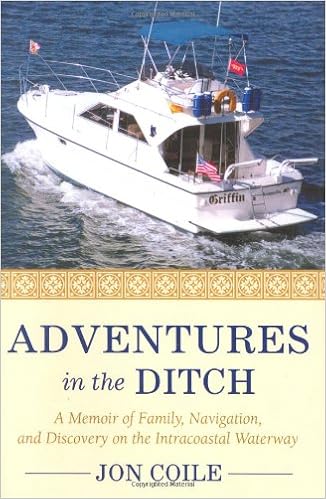
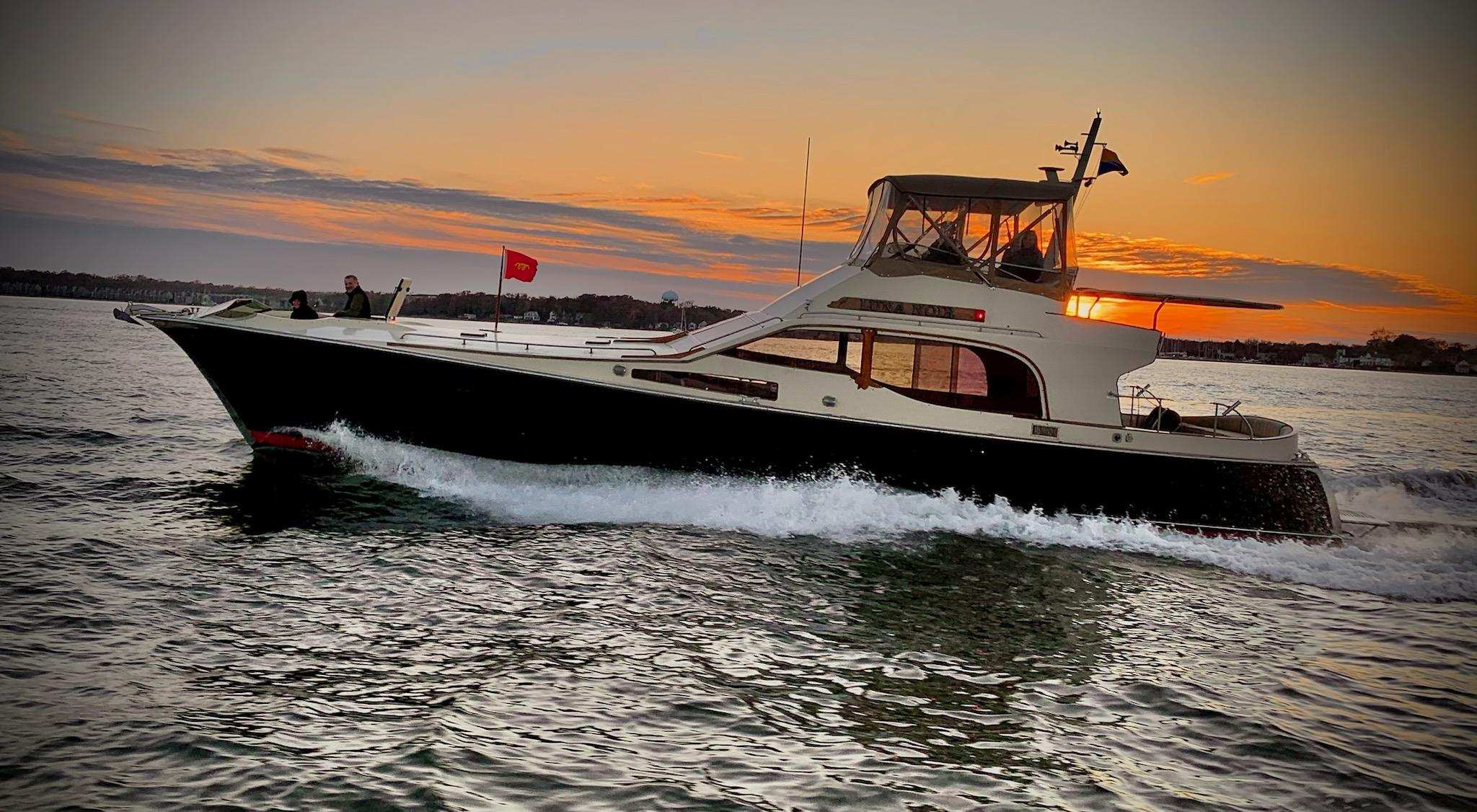
But let’s start with what hadn’t changed much. The boat we used, for both adventures, was a ‘project boat.’ Both good boats that had seen better days in their past and needed some attention to bring them back into cruising shape. Griffin was a 1985 Fairline Corniche 31. A fiberglass flybridge with twin diesels. Eleanor is a 1981 Cheoy Lee Midnight Lace 52, also a fiberglass flybridge with twin diesels. Both are fairly simple in boat terms in that they don’t have many complicated systems. No autopilot. No water maker. One small generator to power the air-conditioning systems and provide multiple charging points for our personal electronics. And both took a year to get everything working up to the level required to make a thousand-mile trip. Terese took on the job of esthetics onboard Eleanor, reupholstering the salon furniture and putting ten coats of varnish on our extensive exterior teak. So, I will say we look better this time compared to the utilitarian Griffin. We lost count of how many people we saw taking pictures of Eleanor from their boats or the shoreline, which was fun validation of the work we put in, and of course Eleanor’s beautiful and unique lines.
Griffin had her original 1985 vintage Volvo diesels when we made the trip back in 1997. Back then engines smoked and smelled. Every day we had to wash the transom to get the soot off after a day running on the ICW. Eleanor was repowered in 2002 with the then current state of the art in Yanmar diesels. No soot. No smell. I’ve heard that diesel engines have come even further in the two decades since our Yanmars came out, but we are content with what we have.
Another thing that hasn’t changed are the shifting sandbars on the ICW. The Intracoastal is basically a series of rivers, sounds, bays, and creeks, connected with the occasional canal dug out of the mud or rocks to connect the natural waterways. Built back in the 1930s as a way for tugs and barges to move up and down the coast without regard to North Atlantic weather, the ongoing and perpetual challenge is keeping these various waterways dredged to at least six feet. Where inlets from the Atlantic intersect the ICW, silt starts piling up and can block the waterway. Dredging equipment moves up and down the ICW attacking the sandbar of the day.
But here is the positive change. Thanks to the advancement in electronics, and rapid dissemination of information through the internet, it is easy to have near-real-time situational awareness of the locations of these shifting shoals. In the narrow channels of the ICW, the U.S. Army Corps of Engineers run a survey boat with a side-scanning sonar taking a detailed picture of the bottom. Then using color coding to show different water depths, from green through yellow to orange and ultimately red, it is easy to understand where the danger lies. Broadcast to the internet, and then downloaded to an iPad connected to a small GPS receiver, we can see exactly where Eleanor is in relation to the shoals. With such situational awareness we don’t even need to slow from our 21-mph cruising speed to slalom through most areas. Running aground used to be fairly common on the ICW, but now you have to be very unlucky, or inattentive, to touch the bottom. Southbound we did not touch this time, while Griffin hit the bottom at least once both south and northbound.

When I started writing Adventures in the Ditch in 1997 there was only one book in print that covered the Intracoastal Waterway in memoir format. The competition, Honey, Let’s Get a Boat was actually the first of the Great Loop books that started with a northbound trip up the ICW, but then kept going up the Hudson to the Great Lakes, over to Chicago, down the Mississippi to the Gulf and around Florida back to the starting point. Clearly a more adventurous journey than just the ICW, but for those who wanted to know what to expect on the ICW portion of the trip, Honey… and Adventures… were the only two choices for several years.
Flash forward to today, there are countless blogs, Facebook groups, YouTube videos, and channels devoted to sharing the daily adventures on the ICW. Pick your type of boat, from derelict sailboat to million-dollar motor yacht and there is a blog or video channel where you can follow someone living your dream. There are Facebook sites devoted specifically to ICW navigation. Others devoted to the trawler cruising lifestyle. Still others that are focused on advice on repairs, improvements, and product recommendations. Even young families that have sold everything and moved aboard to explore the world, starting with the Atlantic coast of America. And then there is Bobby, who has an ever-changing crew of young lovelies who frolic for his selfie video camera on his YouTube channel, “Sailing Doodles.” You name it, you can find it on the internet, continuously updated.
The final thing that seemed different is the quantity and quality of boats on the water. We are amazed at the size and grandeur of the yachts we’ve encountered this time around. There were always large yachts, but it seems the average boat we encounter is bigger and newer now, than what we remember from twenty-four years ago. This is kind of interesting since in the intervening years we’ve had the Dotcom bust, the Great Recession, and the recent Pandemic. Still, the country seems richer than it was a quarter century ago.
So, Susan, no Adventure in the Ditch, Volume II. This little blog is it. As they say, “no market for it.”
Thanks to the crew who helped with the preparation for the journey as well as the onboard crew for the voyage. Jenn was our human autopilot, taking frequent extended turns at the helm. Craig was our CHENG – Chief Engineer — handling pre-underway engine checks every morning and coordinating the shift from shore power to ships power, and back again every day, plus numerous jobs during the year-long renovation of Eleanor. Terese managed all aspects of the voyage, from taking her turns at the helm, including driving Eleanor out into the Atlantic Ocean for the first time, to selecting marinas and restaurants and keeping us all fed and happy. More than a First Mate, she was active as Co-Captain and Cruise Director.
Overall, it was a fun and successful mini adventure!

 Aboard Eleanor
Leave a comment